
Historic churches and other houses of worship are sources of architecture, materials, artwork, and lighting that work together to create a space that feels familiar and deeply connected to the people who gather there.
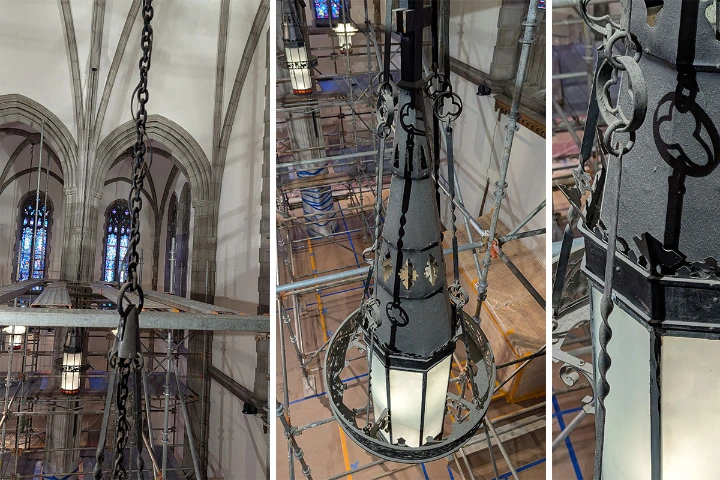
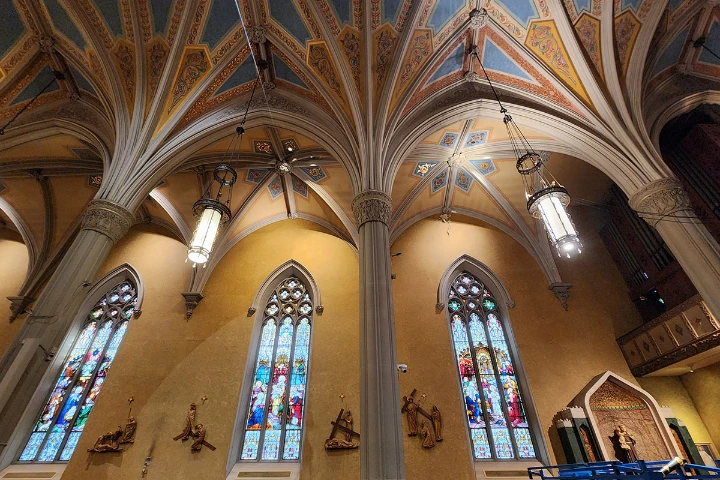
Lighting plays an especially important role in that experience. Original chandeliers, pendants, sconces, lanterns, and decorative fixtures may have illuminated the sanctuary for generations. They help define the building’s character, complement its architectural details, and contribute to the atmosphere of worship.
Over time, these fixtures can begin to present challenges. Wiring may become outdated, finishes may deteriorate, components may become difficult to replace, and the amount or quality of light they provide may no longer meet the needs of the congregation.
Modernizing a historic sanctuary does not have to mean removing the fixtures that make the space unique. With a thoughtful approach to church lighting restoration, historic fixtures can often be repaired, retrofitted, replicated, or carefully updated to provide modern performance while preserving their original appearance.
The Challenge of Modernizing a Historic Worship Space
A sanctuary may need better lighting for reading, services, events, photography, or video broadcasts. Facility teams may also want to reduce energy use, simplify maintenance, improve dimming capabilities, or address concerns related to aging electrical components.
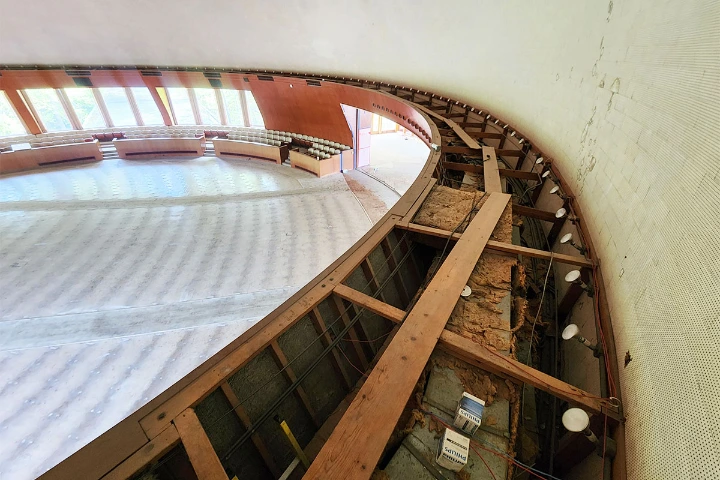
At the same time, replacing original fixtures with modern off-the-shelf products can dramatically change the appearance of the space. Fixtures that are too contemporary, too bright, or visually inconsistent with the architecture may feel out of place and diminish the historic character that the congregation values.
The goal should not simply be to make the sanctuary brighter. A successful project improves function, safety, and efficiency while respecting the building’s design, history, and purpose.
Restore, Retrofit, Replicate, or Replace?
One of the first decisions in a historic church lighting project is determining what should happen to the existing fixtures. In many cases, the answer is not the same for every fixture in the building.
Restoration
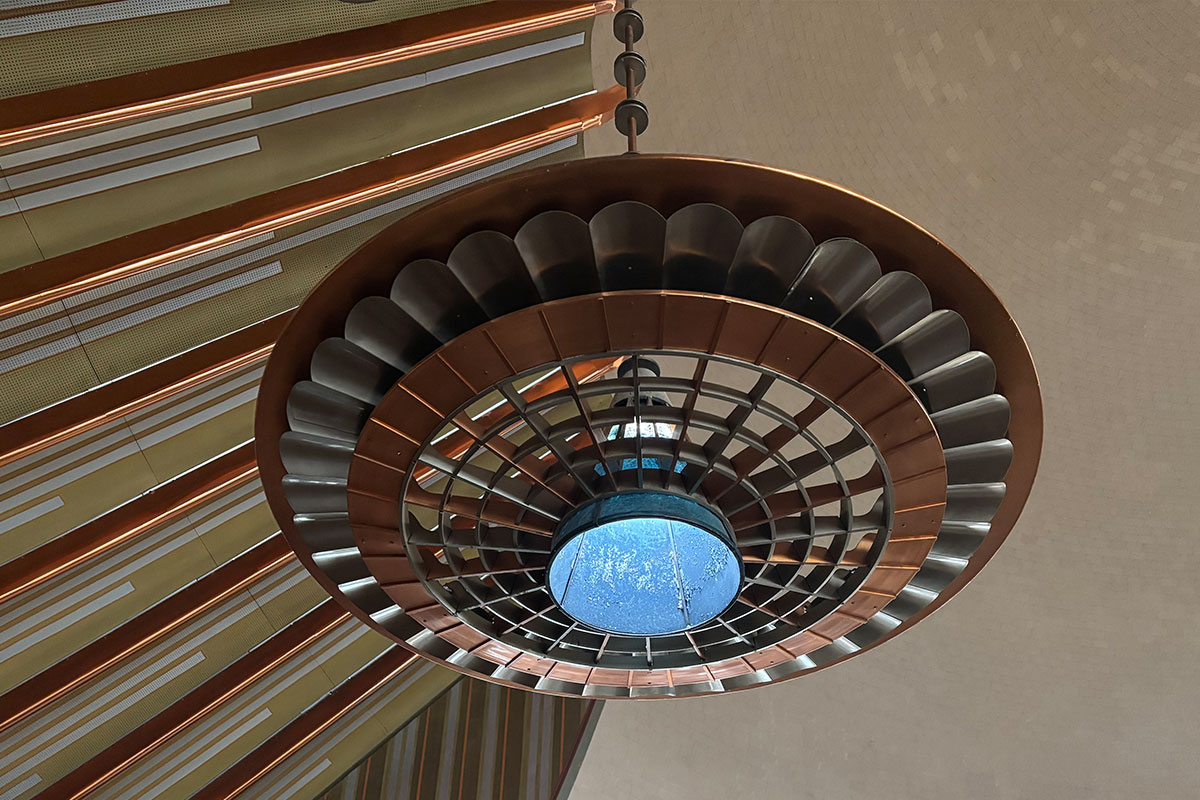
Restoration focuses on preserving as much of the original fixture as possible. Metal components may be repaired, glass may be cleaned or recreated, decorative elements may be rebuilt, and the finish may be restored or carefully matched. This approach is often appropriate when the fixtures are architecturally significant and remain structurally sound.
LED Retrofitting
A retrofit allows the fixture's historic exterior to remain while its internal lighting and electrical components are updated.
This may include new wiring, sockets, LED light sources, drivers, controls, or internal mounting systems. A properly designed retrofit can improve energy efficiency and light quality without making the fixture look noticeably modern.
Replication
When an original fixture is missing, severely damaged, or beyond repair, a replica may be the best solution. Historic photographs, drawings, surviving fixtures, and architectural details can be used to recreate the original design. A well-executed replica can provide modern performance while maintaining visual consistency throughout the sanctuary.
Replacement
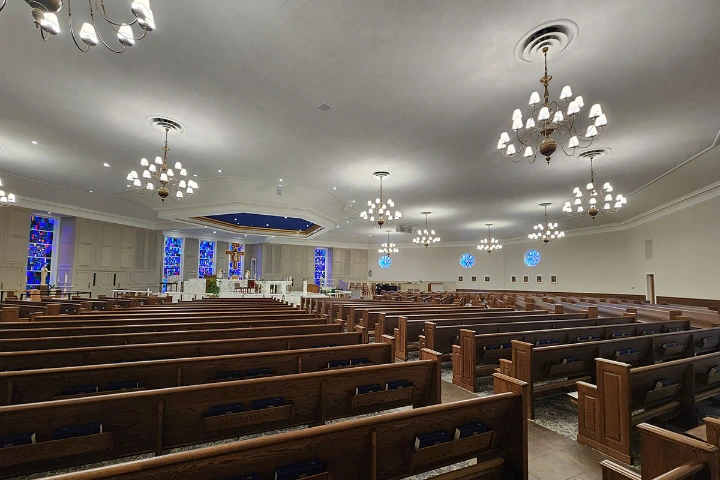
There are also situations where replacement is the most practical choice. However, any new fixture should be selected or custom-designed to complement the building’s scale, materials, architecture, and existing decorative elements.
The decision to restore, retrofit, replicate, or replace should be based on the condition and significance of each fixture, as well as the functional goals of the project.
Safety and Compliance Should Be Part of the Plan
Older fixtures may contain deteriorated wiring, outdated sockets, damaged insulation, or components that no longer meet modern expectations.
When fixtures are restored or modified, electrical safety should be considered from the beginning of the project—not after the design work has been completed.
Depending on the fixture and installation, the process may include rewiring, grounding, testing, component evaluation, documentation, and appropriate UL testing or labeling.
This is especially important for custom fixtures and historic pieces that were manufactured long before current electrical standards were established.
Preserving the appearance of a fixture should never require compromising safety. With proper engineering and testing, modern electrical components can often be integrated discreetly into the original design.
A Thoughtful Restoration Process
Every lighting project is different, but a thorough process may include:
Reviewing the space’s current lighting conditions
Documenting the existing fixtures through photographs and measurements
Evaluating the condition of wiring, sockets, glass, finishes, and structural components
Identifying historically or architecturally significant fixtures
Determining which pieces should be restored, retrofitted, replicated, or replaced
Developing lighting plans or photometric studies
Creating finish samples, mockups, or prototypes
Engineering new electrical and LED components
Testing and labeling fixtures when required
Coordinating packaging, delivery, installation, and project phasing
The most successful projects begin with respect for what is already there.
We work with architects, designers, preservation professionals, contractors, and religious organizations to restore, replicate, retrofit, and create custom lighting for worship spaces. Our team combines lighting design, engineering, fabrication, finish matching, restoration, and UL compliance capabilities to help modernize historic sanctuaries without losing the details that make them meaningful.
Planning a site renovation or evaluating historic light fixtures? Contact HOLOS Lighting to discuss your project, existing fixtures, and long-term lighting goals.